Why Being “Good With Money” Still Doesn’t Mean You Feel Confident

How money stories, outdated rules, and the wrong advice can keep women playing small with their wealth


A lot of women are doing the “right” things with money.
They have the job. They save. They avoid bad debt. They keep money in the bank. They are responsible.
But they still do not feel confident.
In this episode, Shari Rash talks with Michelle Taylor, founder of Women In Wealth and host of Talk Wealthy to Me, about the disconnect so many women feel with money: technically doing well, but still feeling unsure, behind, or afraid to make the next move.
Michelle shares how our early money stories shape the way we save, spend, invest, and ask for help. She and Shari talk about why women often receive money advice that does not account for the reality of their lives, including career pressure, caregiving, emotional labor, entrepreneurship, family expectations, and the desire to feel safe.
They also dig into why keeping too much cash can feel responsible while quietly holding you back, why debt is not always bad when used strategically, and why the right financial community or advisor can help you move from “I’m good with money” to “I actually feel confident about what I’m doing.”
You’ll hear:
Why women can do the right things financially and still feel uncertain
How childhood money conversations become adult money beliefs
Why money advice from well-meaning family members may not fit your actual life
How to start more honest money conversations with friends
Why cash can feel comforting but still cost you growth
The difference between being responsible with money and being confident with money
Why women need financial spaces where they can ask questions without shame
How to find advice that supports your life, your goals, and your version of security
This conversation is for the woman who has worked hard, saved money, avoided obvious mistakes, and still wonders, “Am I actually doing this right?”
Because being good with money is not the finish line.
Feeling clear, confident, and supported is what changes everything.
If you’re ready for personalized, judgment-free financial guidance, learn more about working with Shari. Shari Rash is the founder of GWA Wealth, a virtual advisory firm helping women make confident, values-aligned decisions with their money. Visit GWA Wealth to explore your next step.
Talkin’ Points → where your money gets smarter.
Real talk, practical tips, zero guilt straight to your inbox. Sign up here.
Be sure to like and follow the show on your favorite podcast app!
Keep the conversation going on Instagram @everyonestalkinmoney
Shari Rash is a financial planner and Investment Adviser Representative of GWA Wealth, a Registered Investment Adviser. The information provided in this podcast is for educational and informational purposes only and should not be construed as personalized investment, tax, or legal advice. Listening to this podcast does not create an advisory relationship with Shari Rash or GWA Wealth. All investments involve risk, including the potential loss of principal. Any references to specific investments, strategies, or securities are for illustrative purposes only and are not recommendations. You should consult your own financial advisor, tax professional, or attorney regarding your individual situation before making any financial decisions.
The views expressed by guests are their own and don’t necessarily reflect the views of GWA Wealth.
Learn more about your ad choices. Visit megaphone.fm/adchoices
GEICO Agent (0:00): If you've got an insurance question, you could talk to the butcher at your local grocery store. He'd probably talk about trimming the fat, but it'd be about your brisket, not your insurance policies. Or you could talk to your local GEICO agent. They offer personalized assistance in finding the choicest cuts of coverage for all your insurance needs, which means more money for filet mignon, or if you're a vegetarian, tofu lei mignon. To find a GEICO agent near you, visit geico.com/local.
USAA (0:30): USAA knows dynamic duos can save the day like superheroes and sidekicks or auto and home insurance. With USAA, you can bundle your auto and home and save up to 10%. Tap the banner to learn more and get a quote at usaa.com/bundle. Restrictions apply.
Shari Rash (0:45): Before we dive in a quick reminder that this podcast is for educational and informational purposes only. It is not personalized financial advice. I'm Shari Rash, a financial planner and investment advisor representative with GWA Wealth, a registered investment advisor. Always consult your own financial tax or legal professional before making decisions about your specific situation. And the views expressed by guests are their own and don't necessarily reflect the views of GWA wealth.
Shari Rash (1:24): Today, are talking about something I see all the time with women. You can be doing a lot of the right things with money and still not feel confident. You can have the job. You can be saving. You can avoid bad debt.
Shari Rash (1:38): You can have money sitting in the bank. You can be the responsible one and still have this nagging feeling of, I don't totally know what I'm doing. That disconnect is real. And I think it's one of the biggest reasons so many women stay stuck in a financial middle ground where they're not making obvious mistakes, but they're also not fully building the kind of wealth, freedom, or confidence they actually want. My guest today is Michelle Taylor.
Shari Rash (2:10): She is the host of Talk Wealthy to Me, and she is the founder of Women in Wealth. And today, Michelle and I are talking about money stories, community, confidence, and why women need better conversations around money. We talk about how the way we grew up around money shapes what we believe is possible, why a lot of women were taught money in ways that did not actually speak to their lives, and why well meaning advice from parents, spouses, friends, or family members can sometimes keep us playing small. We also get into one of my favorite topics, cash, because yes, having money and savings matters,
Unknown Speaker (2:57): but there's a
Shari Rash (2:57): point where cash stops being security and starts becoming avoidance. And if you're holding too much money on the sidelines because you're afraid to make the wrong move, this episode is going to speak directly to you. This is not a conversation about shaming anyone for what they have not done. It's a conversation about asking better questions, finding better support, and realizing that being good with money is not the same as feeling confident with money. And just a quick reminder, it is the summertime and episodes are going to come out weekly on Tuesdays.
Shari Rash (3:34): So be sure to check your episode feeds every Tuesday for my latest conversation. Let's get into the episode. Michelle, a lot of women listening have technically done the right things, quote unquote. They have the job, they're saving, but they still don't feel like they have their finances in order. From what you see, where does that disconnect usually come from?
Michelle Taylor (3:58): I think it can come from a few places. You know, at the most elementary of answer, it is how they grew up. So I believe that conversations and exposure to money and how it works and truly the approach of it being just a tool is missing in most families. And so as people are growing up and coming through their adolescence, they are developing their kind of relationship with money or their money story. And then once they get to a place where they feel comfortable because the money is coming in, they are learning it's just a tool.
Michelle Taylor (4:43): And okay, the money's coming in, but now what do I do? And so I think fundamentally, we just need to start doing a better job at having the conversations with each other and, you know, oversimplifying it. Taking the time to say to someone, if you're having, brunch with your girlfriends and you say something and you can tell that they're unsure about it, stop and say, Are you familiar with that? Let me tell you just so you understand. It's those little things that are going to be the easiest and quickest way that we can change women's perception of what comes next by creating environments and tables where money conversations are not taboo and creating an environment of comfort so that they can ask the right question and take themselves to the next level.
Shari Rash (5:41): I say a lot that, well, men and women speak and think differently about money. So as a little girl, if you were being taught anything about money, it was likely coming from your father or a male in your life. And I think, although that's good, right? The whole idea of it is good. I think a lot of times, though, those conversations ended up creating harm unnecessarily because men and women think and talk differently.
Shari Rash (6:14): So if a man's talking to a little girl about money or a college age girl or a woman starting her first career and her dad's sitting with her at the kitchen table and they're having these conversations, they're speaking two different languages. Most of the time, the woman is not leaving that conversation feeling, I feel good about this, what I was just taught. It's more, I'm confused or I'm never gonna get this and I'm just never gonna get it and put my head in the sand forever.
Michelle Taylor (6:45): Well, it's so hard because we're also in this culture of, Oh, it's being mansplained to me. Sometimes that's happened to me so many times, I'm sure you, but you're right, how we approach all things in life. I'm going to take it even broader and say politics, religion, money, all of these things are based on our human experiences up until that point. So for a man to try and teach a woman about money, they don't understand the nuances that come with being a woman and what it's like to be an entrepreneur and building a business in a predominantly you know, a male industry or being a C suite surrounded by mostly men or the emotional obligation that most of us feel that we're going to have to take care of either kids by leaving the workforce or aging parents. And just the guilt that comes with all of it, they can't understand that.
Michelle Taylor (7:47): It's hard to teach with that in mind, you know? And to your point, then it creates the, what was I can't even relate to that. And then it doesn't do anybody any good.
Shari Rash (7:57): That's right. Or like the spending. Fathers saying to their daughters, You spend so much money. Or like conversations spouses will have that. One's a spender, one's a saver.
Shari Rash (8:10): You spend so much money it feels like someone's coming down or it's judgmental and then the recipient starts to feel bad about themselves. And it's like, no, understanding where they're coming from. In your opinion, I spend a lot of money on Shopping, you know, but that's on a value to you. It's a value to me where I don't spend a lot of money on XYZ dad golfing that you find value in, right? So it's also just understanding where the other person is coming from.
Shari Rash (8:41): I think often when we have these money conversations, we're using, like you said, just your perspective, what And you because you only know your perspective,
Michelle Taylor (8:53): it's the truth. Right? Perception is reality. Yeah, exactly. When it comes to a husband and wife, the easiest way to kind of get over that speed bump is having those money conversations and a plan moving forward.
Michelle Taylor (9:09): That way you can build in the things that matter together, and there's not going to be any confusion as to where you're headed and what you're working towards. If one side of a marriage is working towards this big goal, but not really sharing in the money conversations with their spouse, and then there's a little bit of animosity of like, why did you buy that new watch, husband, when I'm trying to save for this big vacation? He has to know that. You have to be on the same page. I think that, again, it feels like an oversimplification because this is the world we live in, but it really just starts with having the conversations, being on the same page and working as a team and making sure that your perceptions are on the end goal and not behind you.
Michelle Taylor (10:03): And what brought you to that point?
Shari Rash (10:05): You mentioned questions at brunch. And frankly, I wish my girlfriends would ask me, I bring up money at lunch. I think half of them, they know what I do, but they don't even want to talk about it because they don't understand it. Our listeners, either my podcast or yours, they want to learn more about money. They want to talk about money.
Shari Rash (10:25): So what are some fun ways you think that we can talk about money or you can bring up money at brunch with your friends and show them it doesn't have to be this taboo overwhelming conversation? So anybody listening, I would challenge you to
Michelle Taylor (10:44): be the change maker. Start with something that you've seen on the news, or if you feel that it's relevant, you know, I'll go back to, let's say, Saks Fifth Avenue. Everybody online was talking about how the parent company just filed bankruptcy. Bring that up and start kind of the conversation going. Most of the time women don't want to talk about something that they feel they're, ill equipped to, you know, talk about as, as not being an authority.
Michelle Taylor (11:17): And I think that it's all how you pose the question. So anybody listening, I would just say if it's something you're curious about, the easiest thing is to say, oh my gosh, did you guys see what's happening? So before I came today, was trying to figure it all out. I went on the internet or chat GBT and I tried to understand it. Do you guys have any idea?
Michelle Taylor (11:38): And then just kind of maybe say, oh, let me take out my phone. And make it comfortable and make it a judgment free zone where you're not coming in as the authority, but just starting the conversation. And if there's nothing going on in the news, make everybody feel at ease by saying, okay, so I want this one thing, or I want to go on vacation and I'm trying to figure out how to start investing. Do you guys invest yet on your own? What do you do?
Michelle Taylor (12:06): What platform do you use? Do you have someone that helps? Just taking the taboo away from it, but coming from a viewpoint as a curious friend instead of the thought leader or expert in the group, I think is really helpful.
Shari Rash (12:23): You talk a lot about limiting money beliefs. So what are some of the most common beliefs you hear women repeat and how are these beliefs costing them money?
Michelle Taylor (12:36): Oh boy. I mean, I can talk about what I did growing up, and it's likely the same that so many of our listeners would feel they'd also felt growing up. The reality is we are all taught that debt is bad, or that we need to keep a lot in an emergency account. What emergency do we know of that is $30,000 So I think the biggest things for women are they think that they're not ready to invest yet. They don't know where to invest, so they don't start, and they are always concerned that there is enough.
Michelle Taylor (13:15): So when they build up to this big goal and they see this amount sitting in their account, it's comfort and it keeps them thinking small. And I know that you will have, agree you've heard the statistic. We are better investors when we actually do invest than our male counterparts. So the question becomes, how how do you jump in with both feet to understand truly what you need liquid so that you're not leaving money on the sidelines, and where do you start? And I think that once women believe and hear enough that we are really good investors and we have really good intuitions, that can be a game changer.
Michelle Taylor (14:03): The other thing is on the debt. You know, all of us have heard so many talking heads and grew up with debt is bad and some debt is bad. And two things can be true at the same time. Most people who reach a level that they would say they are truly wealthy are not getting there without debt. And debt can be a powerful tool to grow your income if you understand what it needs to do.
Michelle Taylor (14:31): It needs to be tied to an asset, not a revolving credit card that's a purchase. It needs to be growing something overall and then debt is great as long as you're doing it appropriately. So it's really unpacking all the things that we've been taught and figuring out that most of the time it's likely a half truth. Debt can be bad. Savings does need to be liquid and readily available.
Unknown Speaker (15:00): But there's another side to the coin, that's where I think women stop at their belief instead of digging further.
Shari Rash (15:08): I think that lends to the idea of being good with money, but not confident. Like, oh, I'm good with money. I have my emergency fund. I have minimal debt, but you're not confident. You don't feel good about what you're doing.
Shari Rash (15:25): Having minimal debt is a good thing. Having your emergency fund is a good thing. But then hearing the other side of it and saying, well, now let's take the good things you do and make them better. I think that's what creates the confidence. And I think a lot of women are just lacking the confidence with money because as you said, yes, statistically we are better investors, but that better investor is good with her money or good with her investment.
Unknown Speaker (15:55): She's just not still not confident with it. So how do you think we can get the confidence?
Michelle Taylor (16:01): Well, we are in a time of our history that information has never been more readily available. It's a fine line because everybody has a platform, a soapbox, a channel, whatever you wanna call it, and an opinion. We are all now of the school of thought that we deliver our opinions sometimes as fact. I think it's really important to go out and be curious and get as much information as you can, but also understand that after you get that information, you really need to understand if it's suited for you. That's where, despite what we see with AI and robo advisors being in our space of truly helping women grow and invest their wealth and leave a generational impact, I'm still of the belief that there is a human component of that that can never be replaced.
Michelle Taylor (17:00): So find an advisor or a mentor that is at a place where it makes sense for you to work with them. You don't need, if you're just starting out, to go into the city, to the high rise, and find the guy that, or gal that's been doing it for, you know, twenty years. But there are so many wealth managers and advisors out there, and you've got your your choice. Just take the time to find someone that you feel is in alignment and understands where you're at in your life, and reach out to them and say, this is what I've done. Am I on the right track?
Michelle Taylor (17:37): What adjustments do I need to make? And I feel a lot of times, if it's something that is in the client's wheelhouse that they can do on their own, You know, most of us are fiduciary and we'd say, Hey, if you're just opening a Roth IRA for the first time and you want to put $100 a month into that, you don't need an advisor to do that. Go to one of your platforms of choice and just make sure that once you contribute the money, you're actually investing the money. Once you get to X amount, then check-in with me again and we'll see how things are going. I do think that now more than ever, people are operating in the better interest of their client and will give you the advice you need for where you're at.
Michelle Taylor (18:19): But you've got to find the people that can walk you through what is truly appropriate for you and where you're at.
Shari Rash (18:27): Community is so important. Having that person that can give you advice that is in your best interest for women, especially when it comes to their money is essential. So why do you think community is such a powerful and often missing piece of women's financial growth?
Michelle Taylor (18:48): Yeah. I think that it goes back to the confidence gap again. You know, when you start talking about things that we're unsure of, it's less likely that a woman is gonna raise her hand and say, I don't know what private equity is. What does that mean? What are we talking about?
Michelle Taylor (19:06): Because they don't want to feel inferior or like they don't belong at the table. That kind of melts away when they're talking to other women. So I think it's really important, and I think it's why you and I are so committed to building communities that nurture these kinds of conversations to just get women of all stages of life, of all, you know, industries together and watch the magic happen. And I think, you know, at my age, I remember, and I'm sure you can too, when we were young, there was always a competitive nature with women more so than maybe the guys. And it was expected.
Michelle Taylor (19:44): What I think is really exciting to see and live through is that has changed, and now it's more about the girl gang, right? Helping all of us. So if you get women together, they are going to make magic happen because there's no more gatekeeping or competition. It's all about how do we rise up as women, and that's exciting. So we just have to create the rooms and the communities for that conversation and collaboration to happen.
Shari Rash (20:15): Yeah. What is one money rule you think women should stop following immediately?
Unknown Speaker (20:23): I'm going to go back to the easy one of because like I said, so many people will say, Oh, I need six months of expenses. And it's like, do you really need that much money sitting aside? In most healthy economies, if something happened, you're going to find a new job. I think that that's what's kept us small. It's the easiest fix.
Michelle Taylor (20:44): Ladies that are listening, when you're thinking about how much cash to keep on hand, it obviously will depend if you're single or you're married or if you have kids. So take that with a grain of salt. But overall, I would say having enough cash as a floor, and if it makes you nervous to then say, okay, I'm going to dump all of this in, start investing slowly and maybe make a promise to yourself that if your floor of emergency savings is $10,000 but you're nervous, say I'm gonna have a money date with myself every single month or every single quarter, and anything above that floor, I'm gonna say, okay, if my floor is 10 and I've got 13, take a look at your calendar in your life. And if you've got a vacation or Christmas coming up, keep a little bit more. But if you have the ability, take all that money and put it towards, paying down any bad debt, and at the same time, putting money to work for you so that your money is growing while you're sleeping.
Michelle Taylor (21:46): I think that that's an important thing that we've got to remember. We don't want to have lazy assets sitting around and cash is a lazy asset. So don't think that having more money is comfort. More money is costing you money.
Shari Rash (22:00): Yeah. The feeling good is important. You need to feel good about what you're doing. But if feeling good is really hurting you, then that also, I think, is going back to the community or having a trusted resource. Someone else may say, Oh, that's great that you have all that cash in there.
Shari Rash (22:16): And it's like, No, that And then you're a well meeting family member, what have you, saying, Oh, that's great that you have all that cash. But having the community or having a trusted resource that's going, Well, no, actually here's the math, and it isn't. So I get you feel good, but is it
Michelle Taylor (22:35): at the expense of hurting your future self? Well, that's right. And this goes back to Money's story, right? And I feel like we are so lucky to get to see all of this happen because one, ladies, don't take financial advice from somebody that doesn't have a life you want to emulate. And I think that that's really important.
Michelle Taylor (22:55): So I'm going through something right now with a family member who is thinking about making a big life decision because she's scared of taking on any debt. But it's not her that's scared. It's her parents that are placing that fear on her. And so I'm trying to really make that resonate. If you don't wanna be in the same shoes as that person, don't take their financial advice, because you really need to create your own identity, number one.
Michelle Taylor (23:23): And number two, you know, when you think about asking somebody, it's an opinion and how much you need. And there are ways to actually make the numbers reverse out what is true. And, you know, I'll use an example. I once had a client come to me. She had done quite well.
Michelle Taylor (23:42): She was in medical device sales, and she said, You're gonna yell at me after this conversation. I said, No, I'm not. Absolutely not. She said, You will. So we're going through her personal financial statement, and she tells me that she has $1,000,000 in a checking account and no investments.
Unknown Speaker (24:03): When I said, Okay, I'm not going to yell, but I have to know why. She said, Well, I didn't know what to do with it. I'm so scared of what if all of these big commission checks end. What do I do then? Again, having that conversation with your mom who may have never had more than $10,000 in
Unknown Speaker (24:23): an
Michelle Taylor (24:23): account, or with a man who maybe has never not had that much money, it's going to be different. So finding somebody that is a trusted licensed professional is so important to say, Let's unpack this. If the commission checks change, well, this is how much you need to sustain yourself. And now if we just took X amount and invested it and did the math and showed someone what it would look like in seven or ten years, that may be enough encouragement to say, holy cow, I love that. Let me do it.
Michelle Taylor (25:00): And maybe you just start slower, but you need the trusted experienced professionals to tell you based on what is true and not what their experience has been, what you need to do next?
Shari Rash (25:13): I think that story says so many different things to me. One, the fact that people, it's like a stat, I'm sure you've heard it, people much rather go to their dentist than go to their financial advisor. So the fact that she's starting off the conversation going, you're going to yell at me. Think of all the shame that she's carrying around. Right?
Shari Rash (25:37): And how many conversations has she had with people where she left feeling bad, left feeling like she was being yelled at? Right? And then for her and then, you know, she showed the astronomical amount of money that she has in cash and you ask why? And it's like, and you really want to understand why. Where another person probably might say why, but they really don't want to know the answer.
Shari Rash (26:01): They're just like, why? How could you? Why would you? And like not getting to the root of it. And just by you saying why and sitting back and listening kind of just shows one, her previous financial conversations that she's had, but then two, why it's so important to have someone that can, that factors your emotions in, your money story, all of that stuff, because then you can create a plan because odds are someone else may say, We got to
Unknown Speaker (26:32): get that money invested for you and you got to get it working and da da da da. We're going to set up this
Shari Rash (26:35): and that and she's gonna get worse and be like, Woah, yeah. This doesn't feel good. This isn't the experience I wanted. So that is just such a testament to finding someone one, knowing you're not going to get yelled at, you're not going to leave the conversation feeling bad, and they're really going to understand you and then come up with a plan that works for you and feels good for you.
Michelle Taylor (27:03): Yeah. And asking the questions and no shade on any of the guys. My dad was my mentor. I am married to a wonderful man. I hope I'm raising a wonderful man, but the reality is if you want somebody to get to the heart of what matters, girls are just really good at that.
Michelle Taylor (27:25): And so as a woman, sitting across from a woman who gets it can make all the difference in the world. Just like, you know, if you're if you're sitting in a room and feeling all of these, you know, insecurities and don't want to ask questions. You're gonna leave there no better than when you started. In fact, maybe worse off, because now you're dreading going to your advisor. I think it's really important to understand that how men and women plan around money is so different.
Unknown Speaker (27:57): For us women, more often than not, we just want to know, I don't care about the rate of return you're getting me, because I'm not impressing my friends with it at brunch, probably. What I care about is saying, I know that I'm going to be able to buy that second home one day on the beach. I know my kids are going to have the braces. They're going to be able to go to college, and I'm never going to run out of money. If I can make a client feel safe and secure and do that by getting her a 7% rate of return, she's not going to care if it's not 30.
Michelle Taylor (28:31): Where a guy, they want to start with, How much money can you make me? And it's just we're fundamentally different. So you've got to find the person that you gel with and you mesh with to make the difference. I once had a client also tell me that they didn't want to save for their kids to go to college. I said, Okay.
Michelle Taylor (28:54): Immediately the wife said, Wait a minute. I have to tell you, I've had many conversations interviewing advisors, and when we say that, they always are kind of taken aback and almost make us feel guilty because we want our kids to do it on our own, so we've never worked with anyone. And imagine that, right? Again, that's my story or that advisor's story. I'm just here to help you see the forest through the trees, and what you believe is true and important is true and important to me.
Unknown Speaker (29:25): And I think that we do that better than anybody else.
Shari Rash (29:28): I hope this episode helped you think differently about what it means to be confident with money because confidence does not come from pretending you already know everything. It does not come from having the biggest account balance and it does not come from following every money rule you were handed without ever asking whether that rule actually fits your life. Confidence comes from understanding your numbers, understanding your options, and having the right conversations before fear makes the decision for you. One thing that really stood out to me in this conversation is the difference between feeling safe and actually being financially strategic. Sometimes keeping a lot of cash feels safe.
Shari Rash (30:10): Sometimes avoiding all debt feels responsible. Sometimes listening to the advice you grew up with feels like the good thing to do. But if those choices are keeping you from investing, growing, asking better questions, or building wealth in a way that supports your future, then it's worth taking a closer look. And I want you to remember this, you are allowed to outgrow the money advice that no longer fits you. You are allowed to ask questions and you are allowed to need support.
Shari Rash (30:40): You are allowed to want an advisor, a community, or a financial conversation where you do not feel talked down to, judged, or made to feel small. Because money should not be something you avoid until you feel smart enough. Money should be something you learn to use as a tool for your life, your choices, your security, and your freedom. If you want help building a financial plan that connects your cash, investing, retirement, debt, taxes, and bigger goals, you can learn more about working with me at gwawealth.com, or just follow the link in your show notes. Be sure to follow the show on your favorite podcast app so you never miss an episode.
Shari Rash (31:24): And leave a quick rating and review because it helps more people find these conversations. And come keep the conversation going with me on Instagram at everyone's talking money. Remember, money should not be something that makes you feel behind, ashamed, or afraid to ask questions. Money should be a tool to help you live life on your terms.
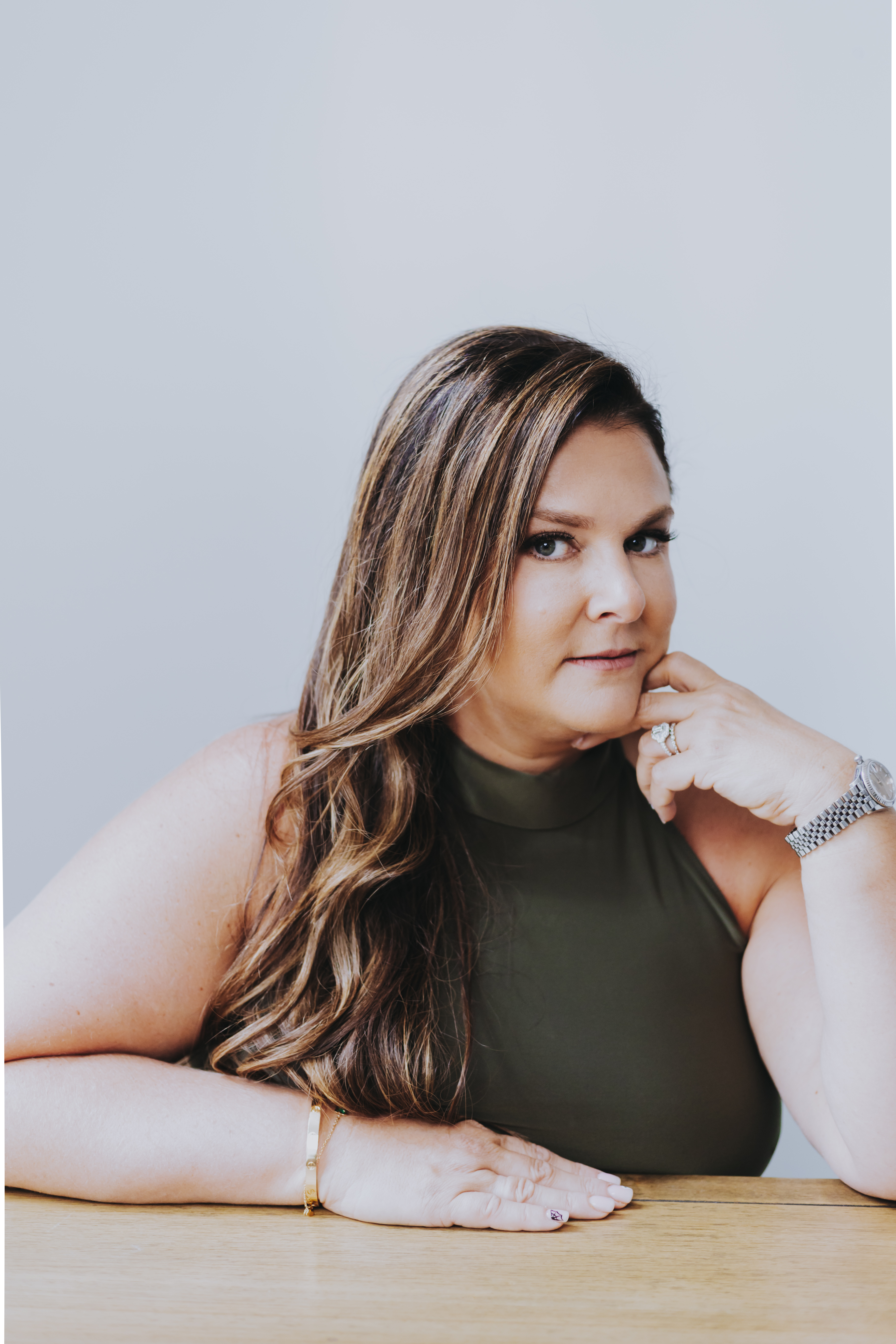
Founder of Women and Wealth Initiative and Financial Advisor at GFG Solutions
Michelle Taylor is the founder of Women in Wealth, a transformative platform aimed at empowering women to take control of their financial futures. With over a decade of experience in financial services, Michelle is committed to closing the wealth gap by providing financial education and a supportive community for women from all walks of life. From business owners preparing for exit strategies to stay-at-home moms managing household budgets, Michelle’s initiative helps women define and achieve their version of financial success with confidence and clarity.
Having overcome personal adversity, including battling leukemia at 17 and launching a business at 27, Michelle’s passion for financial empowerment stems from both professional expertise and personal experiences. She holds a Bachelor’s in Business Administration and Marketing, and has been nationally recognized as a leader in financial planning, especially for female business owners. Michelle continues to guide women through their financial journeys by equipping them with the tools to overcome limiting money beliefs and create long-term security.
Known for her relatable and energetic storytelling, Michelle speaks frequently on topics such as closing the pay gap, financial freedom, and overcoming adversity. Whether through her initiative or as a sought-after speaker and consultant, Michelle’s mission remains clear: to break down financial barriers for women and inspire confidence in every aspect of their financial lives. Married to her husband Jason for 13 years, and mother to Beckett, 11, and Sloane, 7. Michelle … Read More